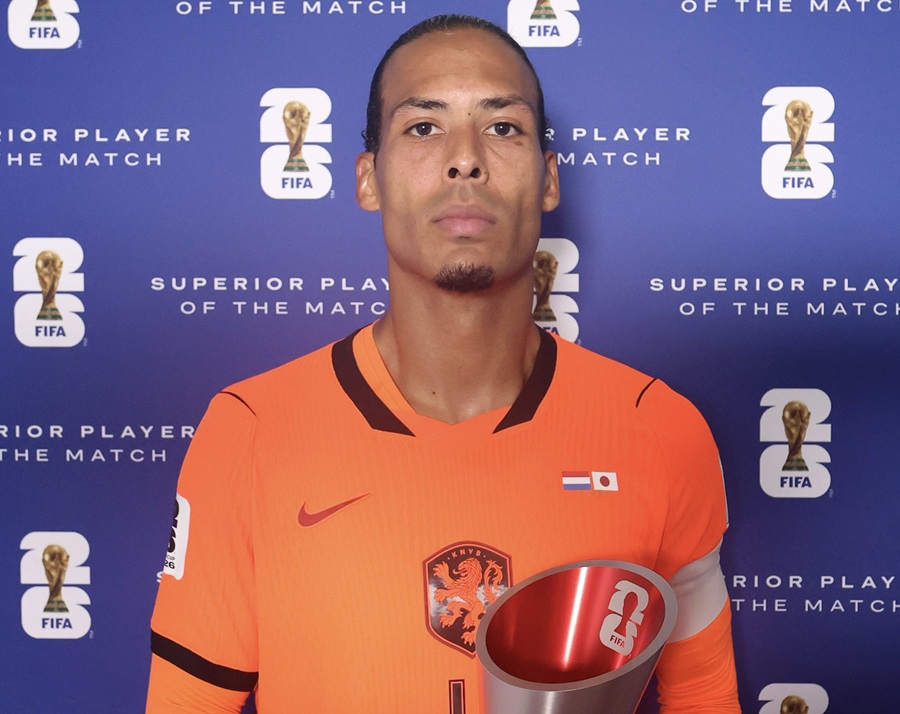
The Netherlands have sent a strong message to the rest of the field at the 2026 FIFA World Cup, transforming early criticism into growing belief after a convincing 5-1 victory over Sweden.
Questions had surrounded Ronald Koeman’s side following a frustrating 2-2 draw against Japan, with concerns raised about the team’s ability to convert chances and the manager’s tactical decisions. However, the emphatic win over Sweden has dramatically changed the conversation, showcasing a Dutch team that appears increasingly capable of making a deep tournament run.
A key factor behind the turnaround was Koeman’s decision to start Brian Brobbey as a traditional target man. The tactical adjustment gave the Netherlands a focal point in attack, allowing the team to retain possession higher up the pitch and create more space for its dangerous wide players. The change paid immediate dividends as the Dutch attack looked far more fluid and effective.
Cody Gakpo once again proved why he remains one of the national team’s most reliable performers. Regardless of his form at club level, the forward continues to thrive in the famous orange shirt. His intelligent movement, positioning, and clinical finishing played a major role in breaking down Sweden’s defense and helping the Netherlands take control of the match.
Another player attracting attention is Crysencio Summerville, whose performances have become one of the tournament’s most exciting storylines. The winger brought pace, creativity, and unpredictability after coming off the bench, repeatedly causing problems for defenders with his ability to operate in tight spaces. His displays are already fueling speculation about potential transfer interest once the World Cup concludes.
Behind the attack, the Netherlands possess one of the tournament’s most technically gifted midfields. The trio of Tijjani Reijnders, Frenkie de Jong, and Ryan Gravenberch has provided the team with composure, creativity, and control. Their ability to resist pressure and dictate the tempo of matches has allowed the Dutch to dominate possession against opponents. While maintaining defensive balance remains important, the quality of the midfield gives Koeman a platform few nations can match.
Defensively, the team continues to rely on the experience and leadership of captain Virgil van Dijk. The veteran center-back remains a commanding presence, particularly in aerial duels and high-pressure situations. Alongside him, the energetic full-back pairing of Denzel Dumfries and Micky van de Ven has added speed and versatility on both ends of the pitch, contributing both defensively and offensively.
Despite the nation’s long history of near misses on football’s biggest stage, optimism is beginning to grow around this Dutch squad. Many supporters have often viewed the Netherlands as one of international football’s unluckiest teams, but this generation appears determined to change that narrative.
The combination of experienced leaders, emerging stars, tactical flexibility, and impressive squad depth has positioned the Netherlands as a serious threat heading into the knockout rounds. Their resilience is reflected in a remarkable record that has seen them avoid defeat within 90 minutes at a World Cup since 2010.
As the tournament progresses, the Netherlands are increasingly looking like a team capable of challenging for the sport’s biggest prize. If their recent performances are any indication, Koeman’s men may finally have the tools required to turn potential into World Cup glory.