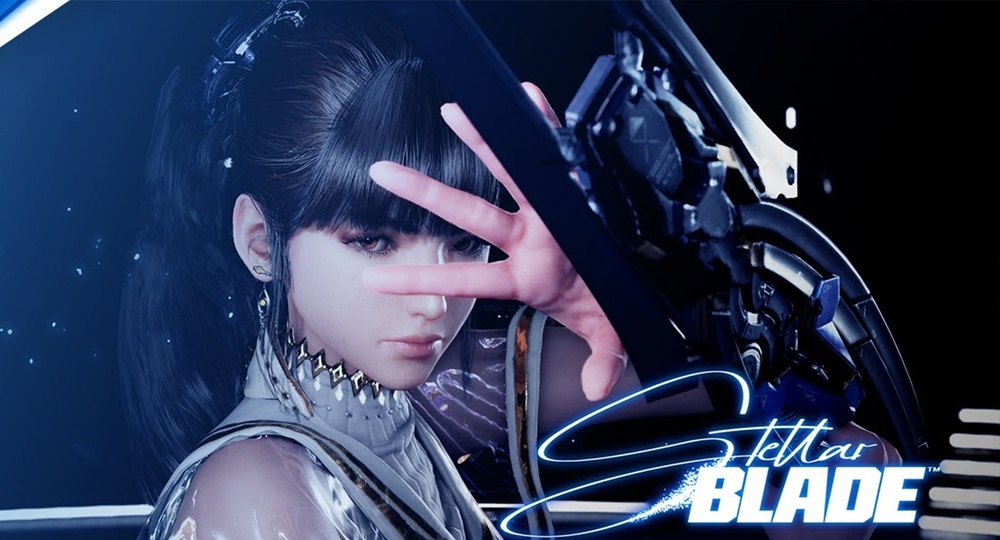
A social media post by Stellar Blade director and character designer Kim Hyung Tae sparked online backlash this week after he shared AI-generated artwork celebrating a new Evangelion project linked to NieR creator Yoko Taro. The post, which included an image resembling Asuka Langley in a stylized plugsuit setting, was later deleted following criticism from artists and fans.
In the original message, Kim expressed excitement about a new Evangelion-related project and mentioned Yoko Taro’s involvement, sharing what he described as a “light image” to mark the occasion. The attached illustration featured an Evangelion-inspired character seated against a surreal backdrop of mask-like faces, with text referencing an Evangelion and Yoko Taro collaboration concept.
The image quickly drew criticism online, with many users objecting to the use of AI-generated artwork — particularly imagery closely resembling an iconic anime character. Critics raised concerns about AI art’s impact on artists and the ethics of using generative tools to emulate established designs tied to a major franchise.
Following the backlash, the post and image were removed.
Yoshi, an artist connected to the discussion, later shared a public update confirming the situation had been resolved. In his statement, he said he received a direct apology from Kim Hyung Tae and confirmed that the image and related posts had been deleted.
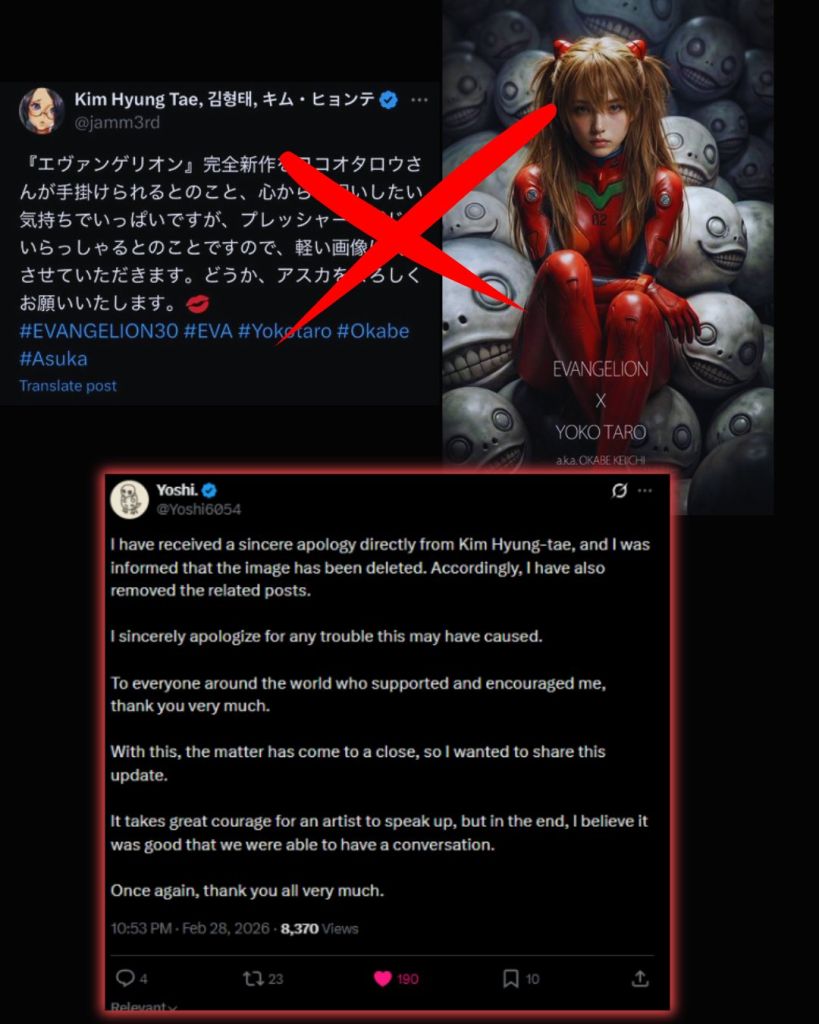
“I sincerely apologize for any trouble this may have caused,” the statement read, adding thanks to supporters and noting that constructive dialogue had taken place. He concluded by saying the matter had come to a close.
The incident highlights ongoing tensions within the gaming and anime communities surrounding AI-generated art, particularly when it intersects with beloved intellectual properties and the work of human artists. As generative tools become more widespread, developers and creators continue to face scrutiny over how such technologies are used in public-facing content.
For now, the controversy appears resolved, but the discussion around AI art, authorship, and respect for creative legacy continues to shape conversations across the industry.